

Description
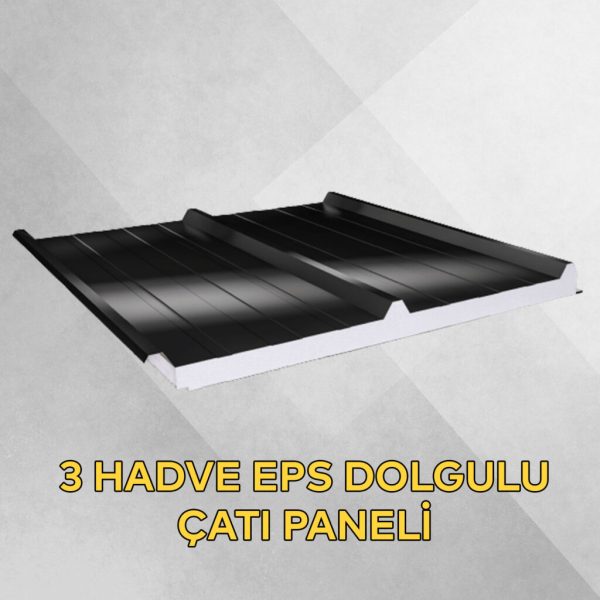
The choice for projects seeking the highest thermal performance in industrial roof applications. PIR (polyisocyanurate) and PUR (polyurethane) filling offers the lowest λ values in the industry at 0.022 W/mK thermal conductivity.
Teknik Özellikler
| Filling material | PIR / PUR rigid foam |
|---|---|
| Thermal conductivity (λ) | 0.022 – 0.024 W/mK |
| Fire class | B-s2,d0 (PIR) / C-s3,d0 (PUR) — EN 13501-1 |
| Density | 38 – 42 kg/m³ |
| Available thicknesses | 40, 50, 60, 80, 100, 120, 150, 200 mm |
| Standard | EN 14509, EN 13165 |
Öne Çıkan Avantajlar
- Lowest U value — 25-40% better thermal performance than other insulation types at the same thickness
- Lightweight — low load on the structural system, more economical construction
- Water vapour resistance — closed-cell PIR structure unaffected by moisture
- Fast installation — 800-1000 m² daily application with connection details
- 40-year service life — long lifespan with paint quality and filling stability
Kullanım Alanları
Logistics warehouses, cold storage roofs, food production facilities, automotive assembly plants, and all industrial buildings where energy efficiency is paramount.
Sık Sorulan Sorular
What is the difference between PIR and PUR?
PIR (polyisocyanurate) is the modified version of PUR (polyurethane). It resists higher temperatures and is one step up in fire class. Thermal performances are nearly identical.
Which thickness should I choose?
For climatized buildings 80-100 mm, for cold storage 120-200 mm, for unheated warehouses 40-60 mm is sufficient. Determined at project stage based on climate data and standards.
What are the paint options?
Standard polyester paint (25 micron) is available in all projects. For corrosive environments, PVDF (35 micron) or plastisol (200 micron) are optional.

Reviews
There are no reviews yet.